STP Marketing Strategy: The Ultimate Guide to Segmentation, Targeting, and Positioning
What is STP Marketing?
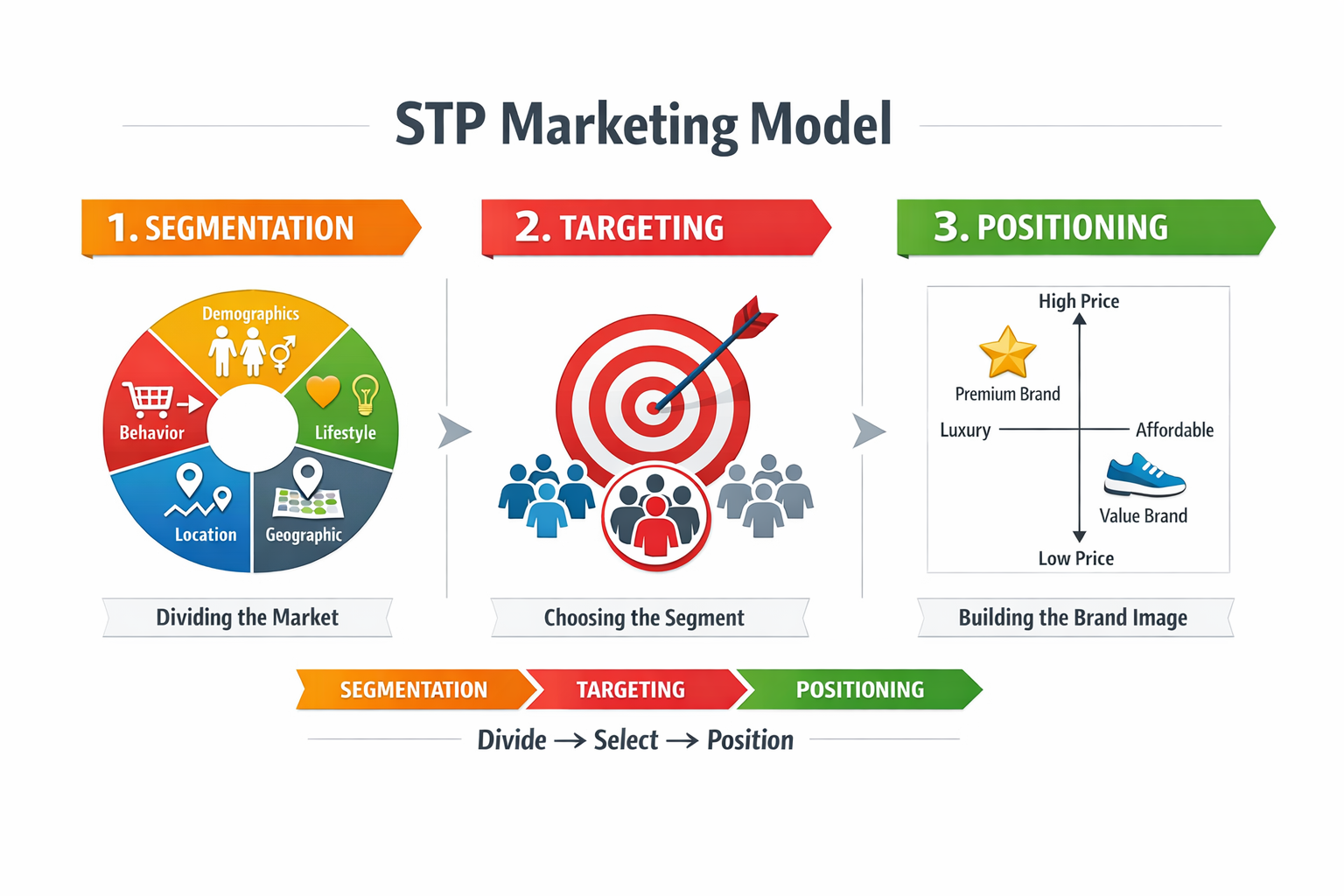
STP Marketing is a three-step strategic approach used to identify and prioritize customer groups and design marketing strategies tailored specifically for them.
The three stages are:
-
Segmentation – Dividing a broad market into smaller groups of customers with similar characteristics.
-
Targeting – Selecting the most attractive segment(s) to focus on.
-
Positioning – Crafting a unique value proposition in the minds of the chosen target audience.
STP ensures that marketing efforts are customer-centric, not product-centric.
1. Market Segmentation: Understanding the Diversity of the Market
What is Market Segmentation?
Market Segmentation is the process of dividing a large, heterogeneous market into smaller, homogeneous groups of consumers who share similar needs, characteristics, or behaviors.
Why is Segmentation Necessary?
Because no product can satisfy everyone in the same way. Customers differ in:
-
Income
-
Age
-
Preferences
-
Lifestyle
-
Geography
-
Buying behavior
-
Cultural background
Segmentation allows companies to:
-
Understand specific customer needs
-
Develop tailored products
-
Design effective marketing campaigns
-
Avoid resource wastage
Types of Market Segmentation
1. Geographic Segmentation
Dividing the market based on location:
-
Country
-
State
-
City
-
Climate
-
Urban vs rural
Example:
McDonald’s adapts its menu in India by offering vegetarian options like McAloo Tikki, while in the U.S., beef-based burgers dominate.
This reflects geographic and cultural adaptation.
2. Demographic Segmentation
Based on measurable statistics:
-
Age
-
Gender
-
Income
-
Education
-
Occupation
-
Family size
Example:
Pampers targets parents with infants and toddlers, not teenagers or elderly customers.
3. Psychographic Segmentation
Based on:
-
Lifestyle
-
Values
-
Personality
-
Interests
-
Social class
Example:
Nike targets ambitious, fitness-oriented individuals who value achievement and performance.
4. Behavioral Segmentation
Based on:
-
Buying behavior
-
Usage rate
-
Brand loyalty
-
Benefits sought
Example:
Amazon uses browsing history and past purchases to segment customers and recommend products.
2. Targeting: Choosing the Right Audience
What is Targeting?
After segmentation, a company evaluates each segment’s attractiveness and selects one or more segments to serve.
Targeting answers the question:
“Which customers should we focus on?”
Factors to Consider in Targeting
-
Segment size and growth potential
-
Profitability
-
Competition intensity
-
Company resources and capabilities
-
Alignment with company mission
Targeting Strategies
1. Undifferentiated Marketing (Mass Marketing)
One product for the entire market.
Example:
Coca-Cola initially promoted a single core product globally.
2. Differentiated Marketing
Different strategies for different segments.
Example:
Maruti Suzuki offers Alto for budget buyers and Baleno for premium customers.
3. Concentrated (Niche) Marketing
Focusing on a single segment.
Example:
Rolex targets high-income luxury consumers only.
4. Micromarketing
Highly personalized marketing.
Example:
Netflix personalizes recommendations based on individual viewing habits.
3. Positioning: Creating a Unique Place in the Customer’s Mind
What is Positioning?
Positioning refers to designing the company’s offering and image so that it occupies a distinct and valued place in the target customer’s mind.
It answers the question:
“Why should customers choose us over competitors?”
Key Elements of Positioning
-
Value Proposition
-
Competitive Advantage
-
Brand Messaging
-
Emotional Appeal
-
Perceived Benefits
Types of Positioning
-
Price-based positioning
-
Quality-based positioning
-
Benefit-based positioning
-
Lifestyle positioning
-
Problem-solution positioning
Example of Strong Positioning
Apple positions itself as:
-
Premium
-
Innovative
-
Design-focused
-
Status-enhancing
Customers do not just buy a phone — they buy identity, ecosystem, and experience.
Why STP is Important for Every Organization
1. Efficient Resource Allocation
Instead of wasting budget on broad audiences, companies focus only on high-potential segments.
2. Higher Customer Satisfaction
Tailored offerings meet specific needs better.
3. Strong Competitive Advantage
Clear positioning differentiates brands.
4. Improved ROI
Targeted marketing leads to higher conversion rates.
5. Strategic Clarity
STP aligns marketing strategy with business objectives.
Real-Life Case Study: Tesla
Step 1: Segmentation
Tesla identified:
-
Environmentally conscious consumers
-
Technology enthusiasts
-
High-income individuals
Step 2: Targeting
Initially, Tesla targeted premium, high-income customers who were willing to pay more for innovation.
Step 3: Positioning
Tesla positioned itself as:
-
Innovative
-
Sustainable
-
High-performance
-
Luxury electric vehicle brand
Unlike traditional car brands, Tesla did not compete on price. It competed on innovation and environmental impact.
Result:
-
Strong brand loyalty
-
Market leadership in EV space
-
Premium pricing power
Mini Case Study: Zomato
Segmentation:
Urban millennials, working professionals, students.
Targeting:
Tech-savvy, convenience-oriented customers in metro cities.
Positioning:
Fast, reliable, and convenient food delivery at your fingertips.
This clear STP strategy helped Zomato dominate the Indian online food delivery space.
How Organizations Can Implement STP Effectively
-
Conduct detailed market research
-
Use data analytics tools
-
Build customer personas
-
Test positioning messages
-
Continuously monitor market changes
Conclusion: STP is Not Optional — It is Strategic Survival
In the modern business landscape, success belongs to organizations that deeply understand their customers.
STP marketing is not merely a marketing theory taught in classrooms. It is a powerful strategic tool that helps companies decide:
-
Who to serve
-
How to serve
-
Why customers should care
Whether you are a startup or a multinational corporation, mastering STP can determine whether your brand becomes invisible — or unforgettable.
In a world full of noise, STP helps your brand speak clearly, confidently, and directly to the right audience.
And that is the foundation of sustainable growth.