
Integrated Marketing Communication (IMC)
Building a Unified Brand Message
Introduction
In today’s highly competitive marketplace, customers interact with brands through multiple channels, including social media, television, websites, email, influencers, and physical stores. To create a consistent and memorable customer experience, businesses must ensure that all their communication efforts work together seamlessly. This approach is known as Integrated Marketing Communication (IMC).
IMC enables organizations to deliver a unified message across every customer touchpoint, helping build stronger brand awareness, trust, and long-term relationships. In the digital era, where consumers constantly switch between online and offline channels, an integrated marketing strategy has become more important than ever.
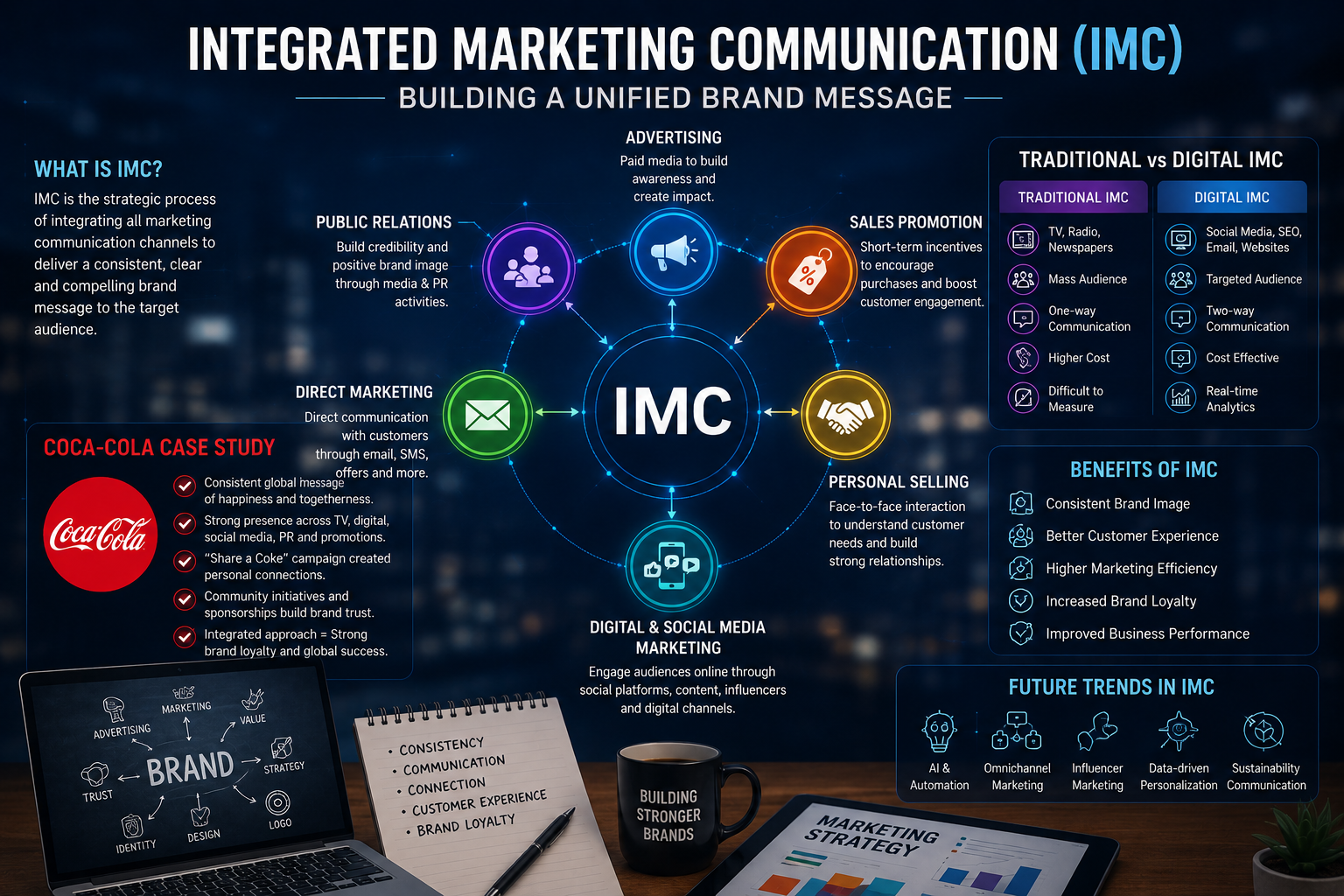
What is Integrated Marketing Communication (IMC)?
Integrated Marketing Communication (IMC) is the process of coordinating and integrating all marketing communication channels to deliver a consistent, clear, and compelling brand message to the target audience.
Instead of treating advertising, public relations, digital marketing, and sales promotions separately, IMC combines them into one unified strategy.
The primary goals of IMC include:
- Building a strong and consistent brand image
- Improving customer engagement
- Increasing marketing effectiveness
- Creating a seamless customer experience
- Maximizing return on marketing investments
A successful IMC strategy ensures that customers receive the same core message regardless of where they interact with the brand.
Components of IMC
Integrated Marketing Communication consists of multiple communication tools working together toward common objectives.
Advertising
Advertising involves paid communication through various media channels to create awareness and influence purchasing decisions.
Examples include:
- Television commercials
- Newspaper advertisements
- Google Ads
- Social media advertisements
- YouTube campaigns
Advertising helps businesses reach large audiences and establish brand recognition
Public Relations (PR)
Public relations focuses on building and maintaining a positive brand image through media relations and community engagement.
Common PR activities include:
- Press releases
- Corporate events
- Sponsorships
- Crisis management
- Community initiatives
Effective PR strengthens credibility and builds trust among customers.
Sales Promotion
Sales promotions provide short-term incentives to encourage immediate purchases.
Examples include:
- Discounts
- Coupons
- Buy-one-get-one offers
- Loyalty programs
- Festival promotions
Sales promotions help boost sales and attract new customers.
Direct Marketing
Direct marketing involves communicating directly with customers without intermediaries.
Methods include:
- Email marketing
- SMS campaigns
- Personalized offers
- Telemarketing
- Direct mail
Modern direct marketing emphasizes personalization and customer relationships.
Personal Selling
Personal selling refers to face-to-face interactions between sales representatives and potential customers.
It is particularly important for:
- High-value products
- B2B markets
- Financial services
- Real estate
Personal selling helps build trust and address customer concerns effectively.
Digital and Social Media Marketing
Digital platforms have become a major component of IMC strategies.
Examples include:
- Social media campaigns
- Content marketing
- Influencer collaborations
- Search Engine Optimization (SEO)
- Pay-Per-Click (PPC) advertising
Digital channels enable businesses to engage with customers in real time and measure campaign performance accurately.
Traditional vs Digital IMC
Marketing communication has evolved significantly with technological advancements.
Traditional IMC
Traditional marketing channels include:
- Television
- Radio
- Newspapers
- Magazines
- Billboards
- Direct mail
Characteristics:
- One-way communication
- Broad audience targeting
- Difficult performance measurement
- Higher costs
- Limited personalization
Traditional media remains effective for mass awareness and brand building.
Digital IMC
Digital marketing channels include:
- Social media platforms
- Search engines
- Email marketing
- Websites
- Mobile applications
- Influencer marketing
Characteristics:
- Two-way communication
- Precise audience targeting
- Real-time analytics
- Lower costs
- High personalization
Digital IMC allows brands to create more meaningful and interactive customer experiences.
Key Differences
Traditional IMC |
Digital IMC |
|---|---|
| Mass communication | Personalized communication |
| Higher costs | Cost-effective campaigns |
| Limited tracking | Real-time analytics |
| One-way interaction | Two-way engagement |
| Broad targeting | Precise audience segmentation |
Modern businesses often combine both traditional and digital approaches to maximize effectiveness.
Coca-Cola Case Study: A Perfect Example of IMC
Coca-Cola is one of the world’s best examples of successful Integrated Marketing Communication.
The company maintains a consistent brand message centered around happiness, togetherness, and positive experiences across every platform.
Advertising
Coca-Cola uses emotional storytelling through television commercials, digital videos, and global campaigns.
The famous “Share a Coke” campaign personalized bottles with customer names, creating strong emotional connections.
Social Media Marketing
The brand actively engages consumers through:
- Instagram campaigns
- Facebook communities
- YouTube content
- User-generated content initiatives
Its social media messaging remains consistent with its overall brand identity.
Public Relations
Coca-Cola participates in:
- Community programs
- Sustainability initiatives
- Global events
- Sports sponsorships
These activities reinforce positive public perception and corporate responsibility.
Sales Promotion
Examples include:
- Seasonal discounts
- Festival campaigns
- Bundle offers
- Retail promotions
Sales activities align with broader advertising messages to maintain consistency.
Personal Selling and Distribution
Strong relationships with retailers and distributors ensure that Coca-Cola products remain widely available and visible to consumers worldwide.
Lessons from Coca-Cola’s IMC Strategy
The success of Coca-Cola demonstrates several important IMC principles:
- Consistent brand messaging
- Emotional storytelling
- Multi-channel integration
- Customer engagement
- Long-term relationship building
The company’s integrated approach has helped maintain one of the strongest brands in the world.
Benefits of Integrated Marketing Communication
Implementing IMC provides several advantages for businesses.
Consistent Brand Image
Customers receive the same message across all channels, strengthening brand recognition and trust.
Consistency reduces confusion and improves brand recall.
Better Customer Experience
Integrated communication creates seamless customer journeys across online and offline platforms.
Customers enjoy a more personalized and connected experience.
Higher Marketing Efficiency
IMC eliminates duplication of efforts and ensures that all marketing activities support common objectives.
This leads to better resource utilization and improved returns on investment.
Increased Brand Loyalty
Consistent communication helps build emotional relationships with customers, encouraging repeat purchases and long-term loyalty.
Improved Business Performance
Organizations with strong IMC strategies often experience:
- Higher sales growth
- Better customer retention
- Increased market share
- Stronger competitive advantages
Integrated communication contributes directly to overall business success.
Future Trends in IMC
The future of Integrated Marketing Communication will be shaped by technology, consumer expectations, and digital innovation.
Artificial Intelligence (AI)
AI is transforming marketing communication through:
- Chatbots
- Predictive analytics
- Personalized recommendations
- Automated content creation
AI helps brands deliver more relevant and efficient customer experiences.
Omnichannel Marketing
Consumers expect seamless experiences across multiple platforms.
Omnichannel strategies integrate:
- Physical stores
- Websites
- Mobile applications
- Social media
- Customer support channels
The distinction between online and offline communication continues to disappear.
Influencer and Creator Marketing
Content creators have become essential components of modern IMC strategies.
Brands increasingly collaborate with influencers to build trust and reach niche audiences.
Authenticity will remain a key factor in future campaigns.
Data-Driven Personalization
Businesses are using customer data to create personalized experiences through:
- Targeted advertisements
- Customized emails
- Product recommendations
- Dynamic content
Personalization improves engagement and customer satisfaction.
Sustainability Communication
Modern consumers value ethical and environmentally responsible brands.
Organizations are integrating sustainability messages into their communication strategies to build stronger emotional connections with customers.