
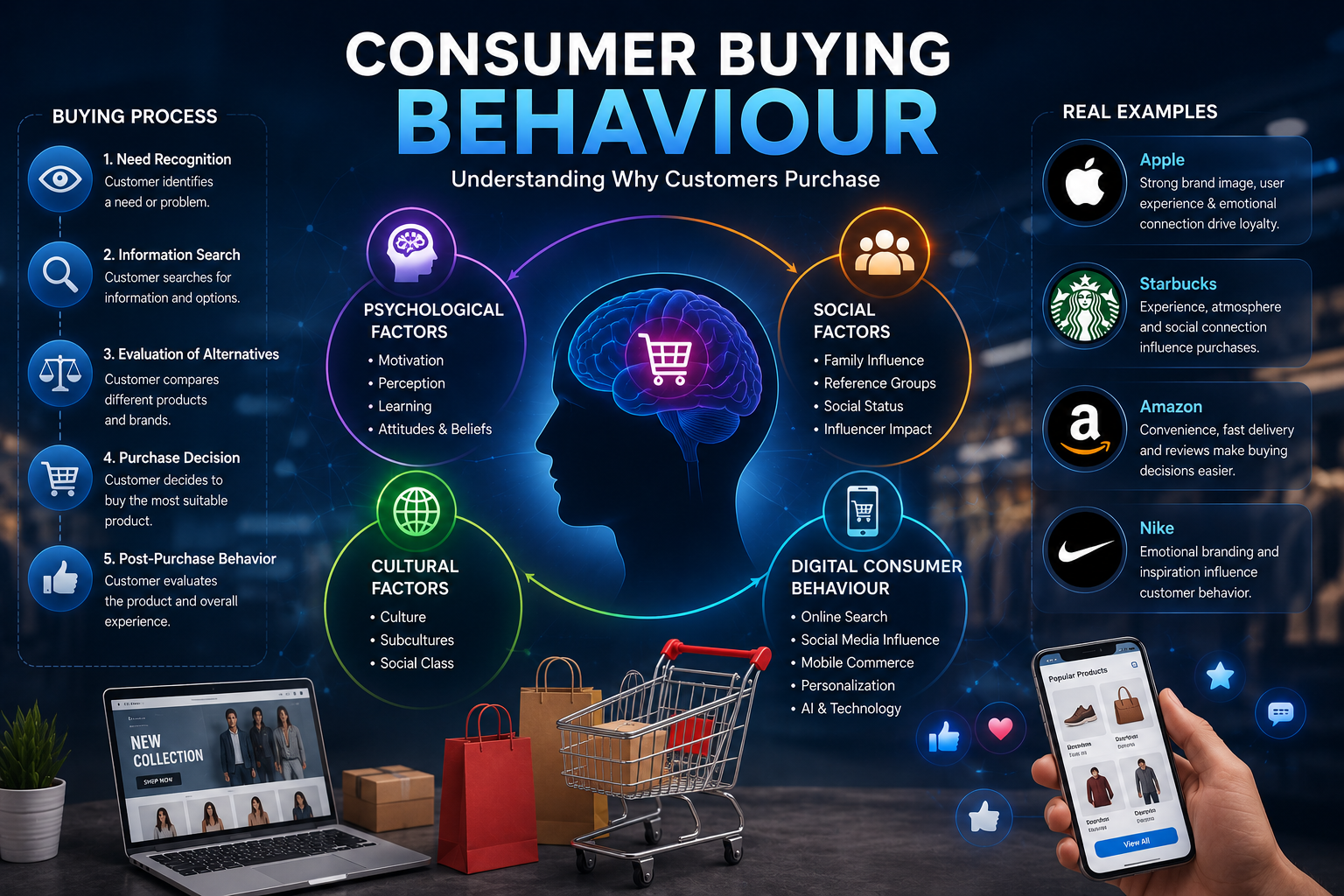
Consumer Buying Behaviour
Understanding Why Customers Purchase
Introduction
Consumer buying behaviour is one of the most important concepts in marketing. It explains how individuals and groups make decisions about purchasing products or services. Understanding why customers buy, what influences their choices, and how they behave during the buying process helps businesses create better marketing strategies and deliver greater value.
In today’s digital world, consumer behaviour is constantly evolving due to technology, social media, changing lifestyles, and increasing access to information. Marketers who understand these changes can build stronger relationships with customers and gain a competitive advantage.
The Consumer Buying Process
Consumers typically go through several stages before making a purchase decision. Understanding this process helps marketers influence customers at every touchpoint.
Need Recognition
The buying process begins when consumers recognize a need or problem.
For example:
- A student needs a new laptop for online classes.
- A professional wants better productivity tools.
- A family needs a larger car due to lifestyle changes.
Marketers create awareness through advertisements, social media campaigns, and content marketing to trigger need recognition.
Information Search
After identifying a need, consumers search for information.
Sources of information include:
- Google searches
- YouTube reviews
- Social media recommendations
- Friends and family
- Company websites
- Online communities
Digital platforms have made information gathering easier than ever before, making transparency and trust crucial for businesses.
Evaluation of Alternatives
Consumers compare different brands, features, prices, and benefits before making a decision.
Factors considered include:
- Quality
- Price
- Brand reputation
- Customer reviews
- Warranty
- Convenience
Marketers can influence this stage through strong value propositions and customer testimonials.
Purchase Decision
At this stage, the consumer decides which product or service to buy.
However, factors such as:
- Discounts
- Availability
- Payment options
- Recommendations
- Customer service
can still influence the final decision.
Post-Purchase Behaviour
The customer evaluates whether the product met their expectations.
Positive experiences lead to:
- Brand loyalty
- Repeat purchases
- Positive word-of-mouth
- Customer advocacy
Negative experiences can result in:
- Complaints
- Negative reviews
- Brand switching
Modern businesses focus heavily on customer satisfaction and relationship management to improve post-purchase behaviour.
Psychological Factors Influencing Consumer Behaviour
Psychological factors play a significant role in shaping buying decisions.
Motivation
Motivation refers to the internal drive that encourages consumers to satisfy their needs.
Maslow’s Hierarchy of Needs explains different levels of motivation:
- Physiological Needs (food, water, shelter)
- Safety Needs (security, health)
- Social Needs (friendship, belonging)
- Esteem Needs (status, recognition)
- Self-Actualization (personal growth)
Luxury brands often target esteem needs, while educational platforms focus on self-development needs.
Perception
Perception is how consumers interpret information and experiences.
Two people can perceive the same product differently based on:
- Past experiences
- Beliefs
- Expectations
- Brand image
Companies invest heavily in branding to create positive consumer perceptions.
Learning
Consumer learning occurs through experience and information.
Satisfied customers learn to trust a brand and become loyal buyers.
Marketing techniques that support learning include:
- Free trials
- Demonstrations
- Product tutorials
- Educational content
Attitudes and Beliefs
Attitudes represent consumers’ feelings and evaluations about products or brands.
Strong positive attitudes increase purchase intentions, while negative experiences can permanently damage brand perception.
Companies use advertising and public relations to influence consumer attitudes positively.
Social Factors Affecting Consumer Behaviour
Human beings are social creatures, and social influences significantly affect buying decisions.
Family Influence
Family members often influence purchasing decisions.
Examples include:
- Parents choosing educational products for children
- Joint decisions regarding cars and homes
- Family recommendations for brands and services
Family remains one of the strongest influences on consumer behaviour.
Reference Groups
Reference groups include people whose opinions consumers value.
These groups include:
- Friends
- Colleagues
- Online communities
- Professional networks
Consumers often seek approval and recommendations from their reference groups before purchasing products.
Social Status
People often purchase products that reflect their social identity and status.
Luxury brands such as:
- Apple
- Mercedes-Benz
- Rolex
- Louis Vuitton
use status positioning as a major marketing strategy.
Consumers may buy premium products to express success, prestige, or uniqueness.
Influencer Marketing
Social media influencers have become powerful reference groups in the digital age.
Consumers trust creators who:
- Share authentic experiences
- Demonstrate products
- Provide honest reviews
This is why influencer marketing has become an essential component of modern marketing strategies.
Cultural Factors Influencing Consumer Behaviour
Culture shapes values, beliefs, lifestyles, and purchasing patterns.
Culture
Culture represents shared beliefs, customs, and traditions within a society.
Examples include:
- Food preferences
- Fashion trends
- Festival shopping behaviour
- Religious considerations
Brands often adapt their campaigns according to cultural values and local traditions.
Subcultures
Subcultures include smaller groups within a larger culture.
Examples:
- Regional communities
- Religious groups
- Professional communities
- Youth culture
Marketers create specialized campaigns to target different subcultures effectively.
Social Class
Social class influences:
- Purchasing power
- Brand preferences
- Lifestyle choices
- Consumption patterns
Companies often segment markets according to income levels and socioeconomic status.
Digital Consumer Behaviour
Technology has transformed how consumers discover, evaluate, and purchase products.
Understanding digital consumer behaviour is essential in 2026.
Online Information Search
Consumers rely heavily on digital platforms before purchasing.
Popular sources include:
- Google Search
- YouTube
- Review websites
- E-commerce platforms
Businesses must maintain strong online visibility to influence purchase decisions.
Social Media Influence
Social media significantly affects buying behaviour.
Consumers interact with brands through:
- Instagram posts
- Facebook communities
- LinkedIn content
- TikTok videos
- Influencer recommendations
User-generated content and customer reviews have become powerful trust signals.
Mobile Commerce
Mobile devices have changed purchasing habits.
Consumers now:
- Browse products on smartphones
- Compare prices instantly
- Make mobile payments
- Shop through apps
Companies must optimize their websites and campaigns for mobile users.
Personalization
Consumers expect personalized experiences.
Modern businesses use data analytics to provide:
- Personalized recommendations
- Customized emails
- Targeted advertisements
- Individual shopping experiences
Personalization increases customer satisfaction and conversion rates.
AI and Consumer Behaviour
Artificial Intelligence is shaping modern consumer experiences through:
- Chatbots
- Recommendation engines
- Predictive analytics
- Voice search assistants
AI enables businesses to understand customer preferences and deliver more relevant experiences.
Real-World Examples of Consumer Buying Behaviour
Example 1: Apple’s Brand Loyalty
Apple customers often repurchase products because of:
- Strong brand image
- User experience
- Ecosystem integration
- Emotional connection
This demonstrates the importance of psychological and social influences on consumer behaviour.
Example 2: Starbucks Experience Marketing
Starbucks sells more than coffee—it sells an experience.
Consumers are influenced by:
- Brand identity
- Store atmosphere
- Social status
- Customer relationships
This shows how emotional and social factors affect purchasing decisions.
Example 3: Amazon’s Convenience Strategy
Amazon focuses on convenience by offering:
- Fast delivery
- Personalized recommendations
- Easy returns
- Customer reviews
These factors reduce consumer effort and improve purchase satisfaction.