
Brand Positioning
How Top Brands Win Customers’ Minds
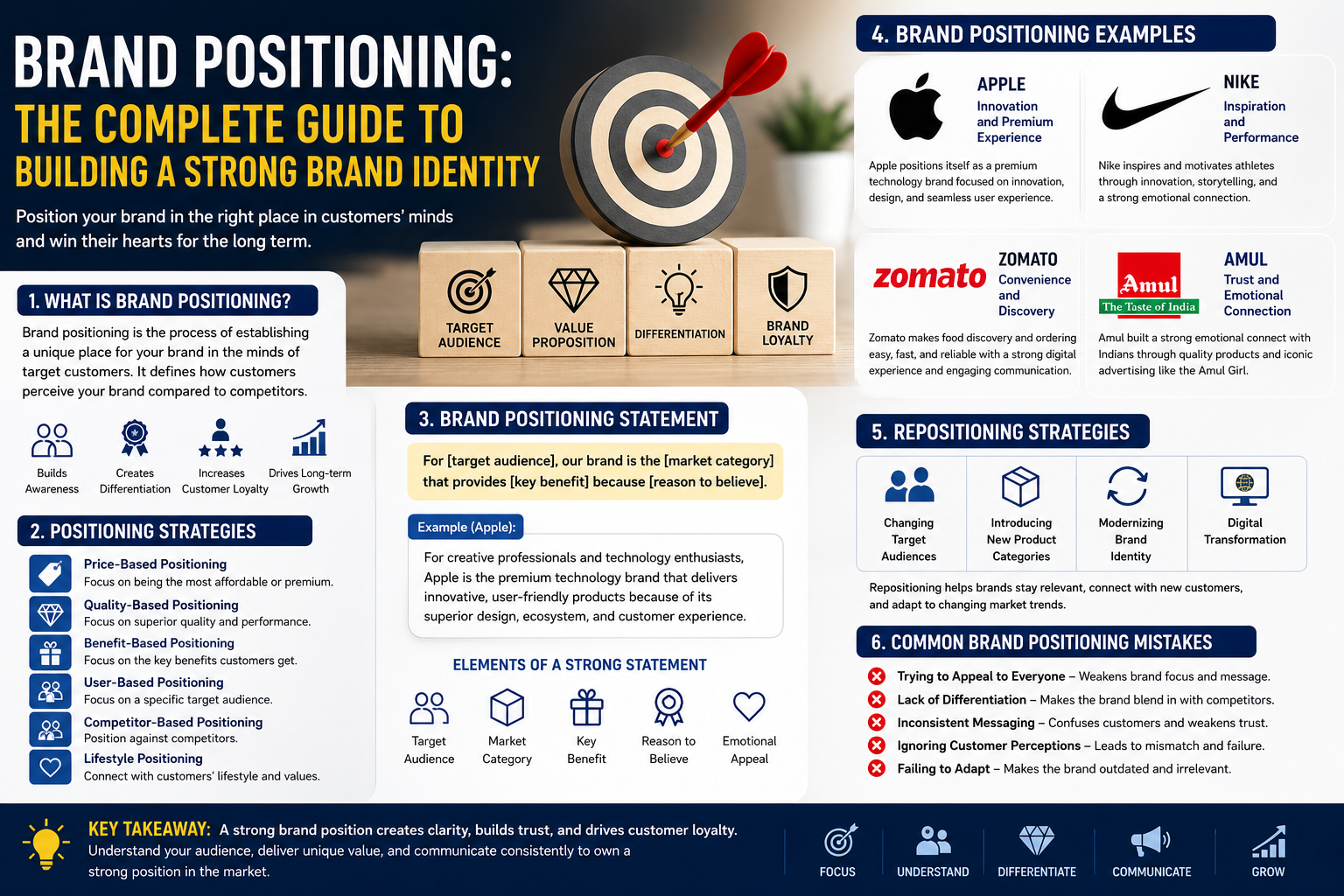
Introduction
In today’s competitive marketplace, having a great product is no longer enough. Customers are exposed to thousands of brands every day, and the brands that succeed are the ones that occupy a unique and memorable place in consumers’ minds. This is where brand positioning becomes essential.
Brand positioning is the process of creating a distinct image and value proposition that differentiates a brand from its competitors. Strong positioning helps businesses attract the right customers, build loyalty, and establish long-term competitive advantages.
Whether it’s Apple’s premium innovation, Nike’s inspirational messaging, or Amul’s emotional connection with Indian consumers, successful brands win because they own a unique position in the market.
What is Brand Positioning?
Brand positioning refers to the process of establishing a unique place for a brand in the minds of target customers. It defines how customers perceive a brand compared to its competitors.
The goal of brand positioning is to answer a simple question:
“Why should customers choose your brand over others?”
Effective brand positioning communicates:
- Who the target audience is
- What value the brand offers
- How it differs from competitors
- Why customers should trust the brand
Strong positioning creates:
- Brand recognition
- Customer loyalty
- Competitive advantages
- Higher perceived value
- Premium pricing opportunities
In simple terms, brand positioning is not what a company says about itself—it’s what customers think and feel about the brand.
Positioning Strategies
Different brands use different positioning strategies depending on their target audience, products, and market conditions.
Price-Based Positioning
Brands position themselves based on affordability or premium pricing.
Examples:
- D-Mart focuses on low prices and value.
- Louis Vuitton positions itself as a luxury brand.
Customers associate these brands with specific price perceptions.
Quality-Based Positioning
Some brands emphasize superior quality and performance.
Examples:
- Apple
- Mercedes-Benz
- Rolex
Customers are willing to pay higher prices because they perceive these brands as offering exceptional quality.
Benefit-Based Positioning
Brands highlight specific benefits that customers receive from their products.
Examples:
- Colgate: Stronger teeth and oral health
- Dettol: Protection against germs
- Dove: Gentle skincare and self-confidence
This strategy focuses on solving customer problems.
User-Based Positioning
Some brands position themselves around a particular target audience.
Examples:
- LinkedIn targets professionals.
- Nike targets athletes and fitness enthusiasts.
- LEGO focuses on children and creative learning.
User-based positioning creates stronger emotional connections with specific customer segments.
Competitor-Based Positioning
Brands sometimes position themselves against competitors.
Examples:
- Pepsi’s “Choice of a New Generation” campaign against Coca-Cola.
- Samsung positioning itself as an innovation-driven alternative to Apple.
This strategy helps customers understand differences quickly.
Lifestyle Positioning
Lifestyle brands connect with customer aspirations, values, and identities.
Examples:
- Harley-Davidson represents freedom and adventure.
- Red Bull symbolizes energy and extreme sports.
- Patagonia focuses on sustainability and environmental responsibility.
Lifestyle positioning often builds strong emotional loyalty.
Brand Positioning Statement
A brand positioning statement is an internal strategic framework that defines how a company wants its brand to be perceived.
A common format is:
For (target audience), our brand is the (market category) that provides (key benefit) because (reason to believe).
Example: Apple
For creative professionals and technology enthusiasts, Apple is the premium technology brand that delivers innovative, user-friendly products because of its superior design, ecosystem, and customer experience.
Example: Nike
For athletes and fitness enthusiasts, Nike is the performance sports brand that inspires people to achieve greatness through innovation and motivation.
Components of a Strong Positioning Statement
A good positioning statement should include:
- Target audience
- Market category
- Unique value proposition
- Competitive advantage
- Emotional appeal
While customers may never see this statement directly, it guides all branding and marketing activities.
Brand Positioning Examples
Studying successful brands provides valuable lessons in effective positioning.
Apple: Innovation and Premium Experience
Apple positions itself as a premium technology brand focused on innovation, simplicity, and creativity.
Key positioning elements include:
- Elegant product design
- Premium pricing
- Strong ecosystem integration
- Exceptional customer experience
Apple customers often buy into the lifestyle and identity associated with the brand, not just the products themselves.
Nike: Inspiration and Performance
Nike’s positioning revolves around empowerment, motivation, and athletic excellence.
Its famous slogan, “Just Do It,” represents determination and self-belief.
Nike successfully connects with customers emotionally through:
- Athlete endorsements
- Inspirational storytelling
- Community engagement
- Performance-driven innovation
The brand stands for much more than sportswear.
Zomato: Convenience and Discovery
Zomato positions itself as a platform that makes food discovery and ordering simple, fast, and enjoyable.
Its brand personality includes:
- Humorous social media content
- Customer-centric communication
- Convenience and accessibility
- Strong digital experiences
Zomato’s witty marketing campaigns have helped create a distinct identity in India’s competitive food delivery market.
Amul: Trust and Emotional Connection
Amul has built one of India’s strongest brand positions through consistency and cultural relevance.
Key elements include:
- The iconic Amul Girl advertisements
- Affordable quality products
- Emotional connections with Indian families
- Social and political commentary through marketing
Amul demonstrates the power of long-term brand consistency.
Repositioning Strategies
Markets evolve, customer preferences change, and brands sometimes need to reposition themselves to remain relevant.
Brand repositioning involves changing customer perceptions about a brand.
Changing Target Audiences
Brands may target new customer segments.
Example:
Old Spice repositioned itself from an older-generation brand to a modern, youth-focused brand through humorous advertising campaigns.
Introducing New Product Categories
Companies often reposition when expanding into new markets.
Example:
Amazon evolved from an online bookstore into a global technology and e-commerce giant.
Modernizing Brand Identity
Updating logos, messaging, and communication styles can help brands stay relevant.
Examples include:
- Burger King
- Pepsi
- Airbnb
Modern consumers expect brands to evolve with changing trends.
Digital Transformation
Traditional companies increasingly reposition themselves as digital-first organizations.
Examples:
- Domino’s transformed into a technology-driven food delivery company.
- Nike strengthened its direct-to-consumer digital presence.
Digital transformation has become a key repositioning strategy in modern business.
Common Brand Positioning Mistakes
Many businesses struggle with positioning because of avoidable mistakes.
Trying to Appeal to Everyone
One of the biggest mistakes is targeting everyone instead of a specific audience.
Strong brands focus on clear customer segments rather than broad markets.
Lack of Differentiation
If customers cannot distinguish a brand from competitors, positioning becomes ineffective.
Businesses must communicate unique value propositions clearly.
Inconsistent Messaging
Different messages across platforms create confusion and weaken brand identity.
Consistency is essential for building trust and recognition.
Ignoring Customer Perceptions
Companies often focus on what they want to communicate instead of understanding how customers actually perceive them.
Successful positioning begins with customer insights.
Failing to Adapt
Markets evolve continuously, and brands that fail to adapt risk becoming irrelevant.
Continuous innovation and repositioning help maintain competitive advantages.