
Social Media Marketing
The Ultimate Guide to Growing Your Brand Online
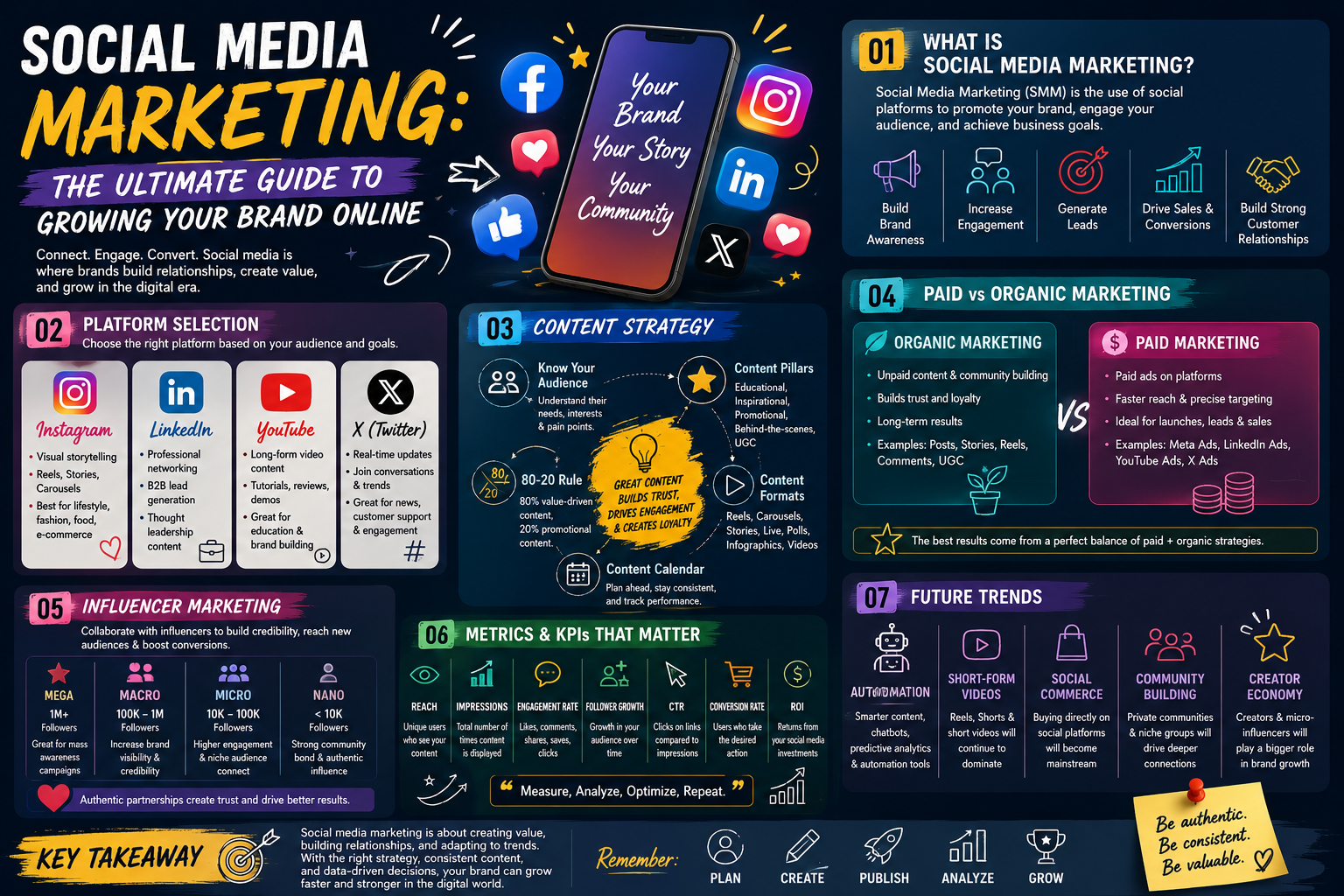
Introduction
Social media has transformed the way businesses connect with customers, build communities, and promote their products. From startups to global brands, organizations use social media platforms to increase awareness, engage audiences, and drive business growth.
In 2026, social media marketing is more than simply posting content—it involves strategic planning, data analysis, community building, influencer collaborations, and paid advertising. Businesses that effectively leverage social platforms can create meaningful relationships with customers and establish strong brand identities in the digital world.
This guide explores the fundamentals of Social Media Marketing (SMM), platform selection, content strategies, paid and organic marketing, influencer collaborations, key performance metrics, and future trends shaping the industry.
What is Social Media Marketing?
Social Media Marketing (SMM) refers to the use of social media platforms to promote brands, engage customers, generate leads, and achieve business objectives.
It involves creating and sharing content, running advertising campaigns, interacting with communities, and analyzing performance metrics.
The primary goals of social media marketing include:
- Building brand awareness
- Increasing website traffic
- Generating leads
- Improving customer engagement
- Driving sales and conversions
- Strengthening customer relationships
Unlike traditional advertising, social media enables two-way communication, allowing businesses to interact directly with their audiences.
In today’s digital landscape, effective social media marketing has become a critical component of overall business strategy.
Platform Selection: Choosing the Right Social Media Channels
Different platforms serve different audiences and business objectives. Selecting the right channels is essential for successful marketing campaigns.
Instagram is one of the most popular visual marketing platforms.
Best suited for:
- Fashion brands
- Food businesses
- Travel companies
- Personal brands
- E-commerce businesses
Popular content formats include:
- Reels
- Stories
- Carousels
- Influencer collaborations
- Live sessions
Instagram excels at visual storytelling and community engagement.
LinkedIn is the leading professional networking platform.
It is ideal for:
- B2B companies
- Recruiters
- Entrepreneurs
- Consultants
- Corporate brands
Effective LinkedIn content includes:
- Industry insights
- Thought leadership articles
- Company updates
- Professional achievements
- Educational content
LinkedIn helps businesses establish authority and generate high-quality leads.
YouTube
YouTube remains the world’s largest video-sharing platform and the second-largest search engine after Google.
Businesses use YouTube for:
- Educational videos
- Product demonstrations
- Tutorials
- Webinars
- Brand storytelling
Video content provides long-term value and strong search visibility.
X (Formerly Twitter)
X focuses on real-time conversations and trending topics.
It is particularly effective for:
- News organizations
- Technology companies
- Personal brands
- Customer service
- Community engagement
Businesses use X to participate in industry discussions and strengthen brand personality.
Content Strategy
Content is the foundation of successful social media marketing.
A strong content strategy ensures consistency, engagement, and long-term growth.
Understanding the Target Audience
Before creating content, businesses must understand:
- Customer demographics
- Interests
- Pain points
- Online behaviour
- Preferred platforms
Audience research helps create relevant and valuable content.
Content Pillars
Content pillars are the major themes around which content is created.
Examples include:
- Educational content
- Inspirational content
- Promotional content
- Behind-the-scenes content
- User-generated content
Using content pillars ensures variety and consistency.
The 80-20 Rule
Successful brands often follow the 80-20 content principle:
- 80% valuable and engaging content
- 20% promotional content
This approach builds trust and prevents audiences from feeling overwhelmed by advertisements.
Content Formats
Modern social media marketing uses multiple content formats, including:
- Short-form videos
- Carousels
- Infographics
- Stories
- Live streams
- Polls
- Podcasts
Diversifying content formats improves audience engagement.
Content Calendar
A content calendar helps businesses:
- Maintain consistency
- Plan campaigns
- Coordinate marketing activities
- Monitor seasonal trends
Consistency remains one of the most important factors for social media growth.
Paid vs Organic Social Media Marketing
Businesses typically combine both organic and paid strategies for maximum effectiveness.
Organic Social Media Marketing
Organic marketing refers to unpaid content and community-building activities.
Examples include:
- Regular posts
- Reels
- Stories
- Community interactions
- Customer support
- User-generated content
Benefits include:
- Lower costs
- Strong customer relationships
- Brand loyalty
- Long-term community growth
However, organic growth often requires patience and consistent effort.
Paid Social Media Marketing
Paid marketing involves advertising through platforms such as:
- Meta Ads (Facebook & Instagram)
- LinkedIn Ads
- YouTube Ads
- X Ads
Benefits include:
- Immediate reach
- Precise audience targeting
- Faster lead generation
- Better scalability
Paid campaigns are particularly useful for:
- Product launches
- Lead generation
- Brand awareness
- E-commerce sales
Finding the Right Balance
The most successful brands combine organic and paid strategies.
Organic content builds trust and community, while paid advertising accelerates business growth and expands reach.
A balanced approach maximizes both short-term and long-term results.
Influencer Marketing
Influencer marketing has become one of the most powerful social media strategies in the digital era.
Consumers often trust creators more than traditional advertisements.
What is Influencer Marketing?
Influencer marketing involves collaborating with individuals who have established credibility and audiences on social media platforms.
Influencers promote products through:
- Reviews
- Tutorials
- Sponsored content
- Product demonstrations
- Brand partnerships
Types of Influencers
Different categories include:
Mega Influencers
More than 1 million followers.
Examples:
- Celebrities
- Public figures
Best for mass awareness campaigns.
Macro Influencers
100,000–1 million followers.
Useful for:
- National campaigns
- Brand visibility
- Large audience engagement
Micro Influencers
10,000–100,000 followers.
Benefits include:
- Higher engagement rates
- Niche audiences
- Better trust levels
Many brands prefer micro-influencers because of their authenticity.
Nano Influencers
Less than 10,000 followers.
They often generate strong community connections and personalized engagement.
Benefits of Influencer Marketing
Influencer collaborations provide:
- Greater credibility
- Improved brand awareness
- Increased engagement
- Higher conversion rates
- Authentic content creation
As social media evolves, creator partnerships continue to play a crucial role in marketing strategies.
Metrics and KPIs
Measuring performance is essential for successful social media marketing.
Key Performance Indicators (KPIs) help marketers evaluate campaign effectiveness and optimize future strategies.
Reach
Reach measures the number of unique users who see a piece of content.
It helps evaluate brand visibility and audience exposure.
Impressions
Impressions represent the total number of times content is displayed, regardless of unique viewers.
Higher impressions indicate broader exposure.
Engagement Rate
Engagement includes:
- Likes
- Comments
- Shares
- Saves
- Clicks
Engagement rate measures how actively audiences interact with content.
Strong engagement often reflects high-quality content and community relationships.
Follower Growth
Tracking follower growth helps businesses understand whether their content strategy is attracting new audiences.
Consistent growth indicates healthy brand development.
Click-Through Rate (CTR)
CTR measures the percentage of users who click on links within social media posts or advertisements.
Higher CTR generally indicates compelling content and effective calls-to-action.
Conversion Rate
Conversion rate measures how many users complete desired actions, such as:
- Purchases
- Newsletter sign-ups
- Form submissions
- App downloads
Conversions ultimately determine the business value of social media efforts.
Return on Investment (ROI)
ROI evaluates whether social media campaigns generate profits relative to marketing expenditures.
Data-driven measurement helps optimize future investments.
Future Trends in Social Media Marketing
Social media continues to evolve rapidly, driven by technology and changing consumer behaviour.
Artificial Intelligence (AI)
AI is transforming social media marketing through:
- Automated content creation
- Chatbots
- Predictive analytics
- Personalized recommendations
- AI-powered advertising
Businesses that effectively integrate AI will gain significant competitive advantages.
Short-Form Video Content
Platforms increasingly prioritize:
- Instagram Reels
- YouTube Shorts
- TikTok videos
Short-form videos offer high engagement and strong organic reach.
Video marketing skills will remain highly valuable in the future.
Social Commerce
Consumers are increasingly purchasing products directly through social platforms.
Features include:
- Instagram Shops
- Facebook Marketplace
- Live commerce events
Social commerce is expected to become a major driver of online sales.
Community Building
Brands are shifting focus from follower counts to community engagement.
Private groups, exclusive memberships, and customer communities will play larger roles in future strategies.
Creator Economy Growth
The creator economy continues to expand rapidly.
Businesses will increasingly collaborate with:
- Content creators
- Industry experts
- Micro-influencers
- Brand ambassadors
Authentic partnerships will become more important than traditional celebrity endorsements.