
SEO Fundamentals
A Beginner-to-Advanced Guide for 2026
Introduction
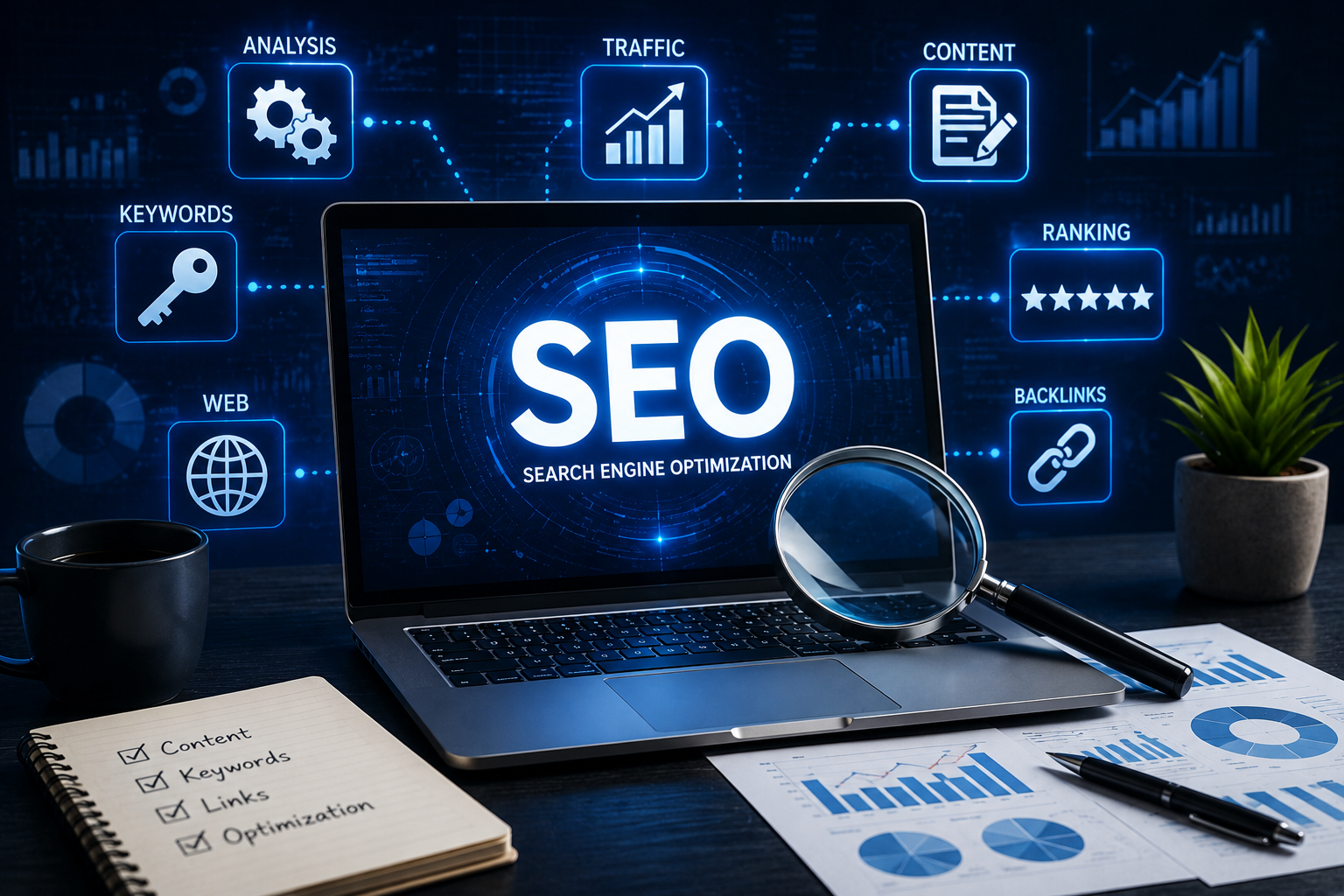
Search Engine Optimization (SEO) remains one of the most powerful digital marketing strategies in 2026. Whether you run a personal blog, an e-commerce store, or a business website, SEO helps you attract organic traffic, build credibility, and generate long-term results without relying solely on paid advertising.
This guide covers everything from the basics to advanced concepts, helping beginners and marketers understand how modern SEO works in an AI-driven world.
What is SEO?
SEO (Search Engine Optimization) is the process of improving a website’s visibility on search engines such as Google, Bing, and Yahoo. The primary goal of SEO is to rank higher for relevant keywords so that users can find your content organically.
Search engines use complex algorithms to evaluate millions of web pages and determine which ones provide the most value to users. SEO helps optimize your website according to these ranking factors.
The major benefits of SEO include:
-
Increased organic traffic
-
Higher brand credibility and trust
-
Better user experience
-
Cost-effective long-term marketing
-
Sustainable business growth
In 2026, SEO is no longer just about keywords; it focuses on delivering valuable content, improving user experience, and satisfying search intent.
On-Page SEO
On-page SEO refers to all optimization activities performed directly on your website to improve rankings and user experience.
Keyword Research
Keyword research is the foundation of successful SEO. It helps identify the terms and phrases users search for online.
Popular keyword research tools include:
- Google Keyword Planner
- Ahrefs
- SEMrush
- Ubersuggest
- Google Trends
Focus on:
- High-intent keywords
- Long-tail keywords
- Question-based searches
- Low-competition opportunities
Title Tags and Meta Descriptions
Your title tag is one of the most important ranking factors.
Best practices:
- Keep titles under 60 characters
- Include primary keywords naturally
- Make titles compelling and clickable
Meta descriptions should:
- Stay within 155–160 characters
- Summarize the content effectively
- Include target keywords
Header Structure
Use proper heading hierarchy:
- H1 for the main title
- H2 for major sections
- H3 and H4 for subtopics
Well-structured content improves readability and helps search engines understand your page.
Content Optimization
High-quality content should be:
- Original and valuable
- Easy to read
- Comprehensive
- User-focused
- Updated regularly
Modern SEO prioritizes helpful content over keyword stuffing.
Internal Linking
Internal links connect pages within your website.
Benefits include:
- Better website navigation
- Improved crawlability
- Increased session duration
- Distribution of link authority
Always link relevant articles naturally within your content.
Image Optimization
Optimize images by:
- Using descriptive file names
- Adding alt text
- Compressing large files
- Using modern formats like WebP
Image SEO improves both rankings and user experience.
Off-Page SEO
Off-page SEO focuses on activities outside your website that improve authority and trustworthiness.
Backlink Building
Backlinks are links from other websites pointing to your content.
Quality matters more than quantity.
Effective strategies include:
- Guest blogging
- Creating shareable content
- Digital PR campaigns
- Industry collaborations
- Resource page link building
High-authority backlinks significantly improve search rankings.
Social Media Signals
While social signals may not directly affect rankings, they increase:
- Content visibility
- Brand awareness
- Website traffic
- User engagement
Strong social media presence supports overall SEO performance.
Brand Mentions
Search engines increasingly recognize unlinked brand mentions as trust indicators.
Building a strong online reputation helps improve authority and credibility.
Local SEO
For businesses, local SEO remains essential.
Optimization includes:
- Google Business Profile management
- Local citations
- Customer reviews
- Location-based keywords
Local searches continue to grow, making local optimization critical for businesses in 2026.
Technical SEO
Technical SEO ensures that search engines can efficiently crawl, index, and understand your website.
Website Speed Optimization
Page speed directly impacts both rankings and user experience.
Improve loading times by:
- Compressing images
- Using caching techniques
- Minimizing CSS and JavaScript
- Implementing Content Delivery Networks (CDNs)
Core Web Vitals remain important ranking factors.
Mobile Optimization
With mobile-first indexing, websites must provide excellent experiences across all devices.
Best practices include:
- Responsive design
- Fast mobile loading speeds
- Easy navigation
- Optimized buttons and forms
XML Sitemaps
XML sitemaps help search engines discover important pages on your website.
Submit your sitemap through:
- Google Search Console
- Bing Webmaster Tools
Robots.txt
The robots.txt file controls how search engines crawl your website.
Proper configuration prevents unnecessary indexing and improves crawl efficiency.
Structured Data (Schema Markup)
Schema markup provides additional information to search engines.
Benefits include:
- Rich snippets
- Higher click-through rates
- Improved search appearance
Common schema types include:
- Articles
- FAQs
- Products
- Reviews
- Organizations
HTTPS Security
Secure websites using HTTPS are preferred by both users and search engines.
SSL certificates have become a standard requirement for modern websites.
AI & SEO in 2026
Artificial Intelligence is transforming the SEO landscape.
Google’s AI-powered algorithms now focus heavily on:
- User intent
- Content quality
- Expertise
- Experience
- Trustworthiness
AI Search Experiences
Search engines increasingly provide AI-generated answers directly within results.
To succeed, content creators should focus on:
- Original insights
- Expert opinions
- Comprehensive coverage
- Unique perspectives
E-E-A-T Principles
Google emphasizes:
- Experience
- Expertise
- Authoritativeness
- Trustworthiness
Building personal branding and demonstrating real-world experience have become crucial for SEO success.
AI Content Creation
AI tools can assist with:
- Content ideation
- Keyword research
- Optimization suggestions
- Draft generation
However, human expertise and originality remain essential.
Successful marketers combine AI efficiency with human creativity and experience.
Common SEO Mistakes
Many websites fail to achieve strong rankings because of avoidable mistakes.
Keyword Stuffing
Overusing keywords damages readability and may lead to penalties.
Always prioritize natural writing.
Ignoring Search Intent
Understanding what users truly want is more important than targeting keywords alone.
Content should solve problems and answer questions effectively.
Poor Mobile Experience
Non-responsive websites lose both rankings and users.
Mobile optimization should never be ignored.
Slow Website Speed
Users expect fast-loading pages.
A slow website increases bounce rates and negatively impacts SEO performance.
Low-Quality Backlinks
Buying spammy links can harm website authority.
Focus on earning quality backlinks through valuable content.
Not Updating Content
Outdated content gradually loses rankings.
Regular updates keep information relevant and improve performance.
Essential SEO Tools
Modern SEO professionals rely on various tools to improve efficiency and decision-making.
Google Search Console
Google Search Console helps monitor:
- Search performance
- Indexing issues
- Keyword rankings
- Technical problems
It is one of the most important free SEO tools available.
Google Analytics 4 (GA4)
GA4 provides insights into:
- User behavior
- Traffic sources
- Engagement metrics
- Conversion tracking
Data-driven decisions improve SEO strategies.
Ahrefs
Ahrefs offers:
- Keyword research
- Competitor analysis
- Backlink monitoring
- Content gap analysis
It remains a leading SEO platform.
SEMrush
SEMrush provides:
- Site audits
- Position tracking
- PPC insights
- Content optimization tools
Many marketers use it as an all-in-one digital marketing solution.
Google Trends
Google Trends helps identify:
- Emerging topics
- Seasonal trends
- Regional interest
- Content opportunities
It is highly useful for content planning and keyword discovery.